This is a series of posts about the Dinitz-Garg-Goemans (DGG) conjecture, which describes a very special issue in many industrial areas. The first post of the series describes the current situation, contains the license information.
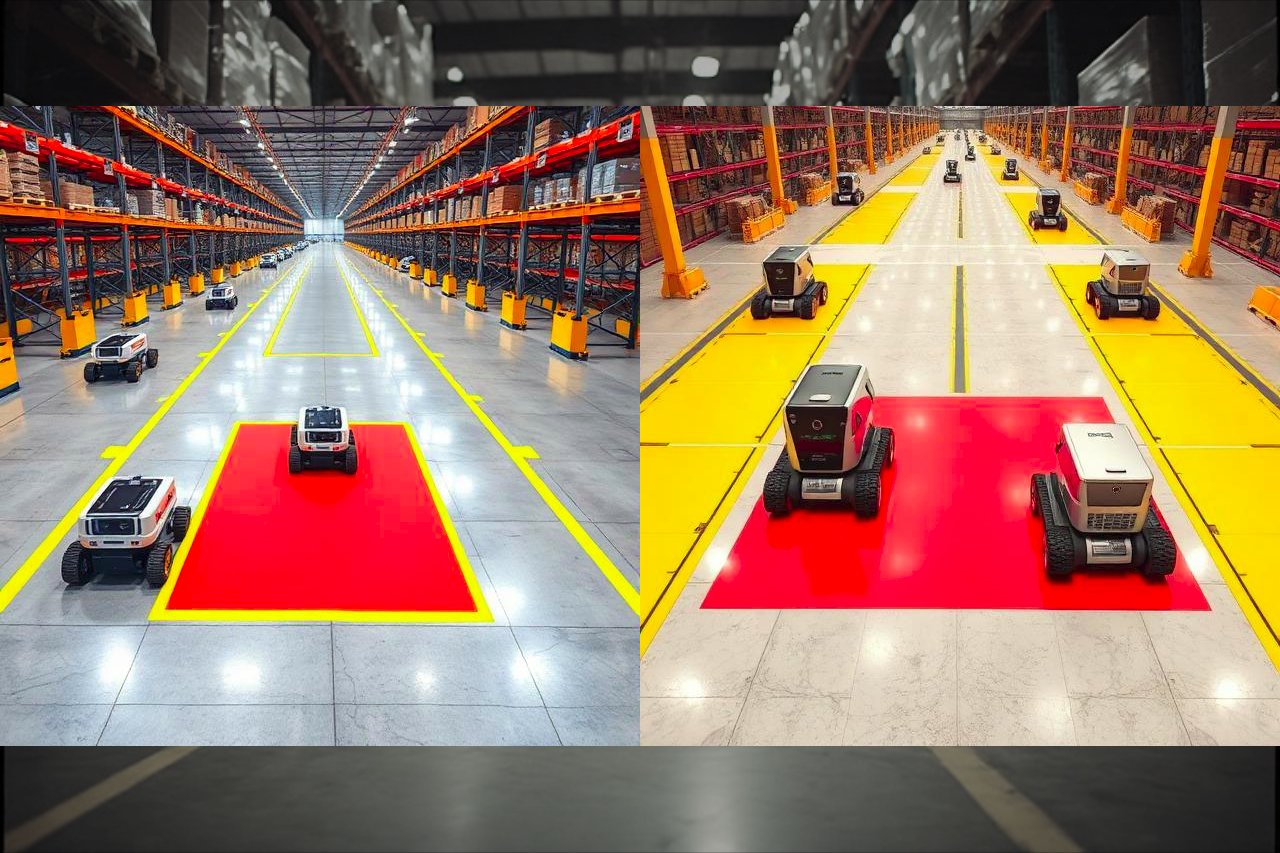
By translating the architectural crisis into pure graph-theoretic terms, the paper provides a decisive structural remedy. It completely replaces empirical trial-and-error with analytical certainty, executing this shift in two distinct, powerful phases.
1. The Algebraic Falsification: A Definite Boundary for Structural Designers
The first major contribution of the newly on Zenodo published paper is the formal, algebraic falsification of the 1999 Dinitz-Garg-Goemans (DGG) cost conjecture for the Single-Source Unsplittable Flow Problem (SSUFP).
The Structural Proof Mechanism
The paper constructs an exact, asymmetric topological graph containing a source , two distinct terminals , and a critical central edge with capacity and low routing cost .
It algebraically proves that under a continuous, fractional flow model, the total system cost is bounded perfectly at:
However, when the demands are atomized and unsplittable, any purely spatial routing algorithm faces a geometric trap. To avoid overloading the main bottleneck, the system must divert the second unsplittable flow to an alternative peripheral path characterized by an unconstrained, highly punitive environmental cost variable .
The paper calculates the exact optimal ununsplit cost under static constraints as:
By evaluating the competitive ratio between the discrete unteilbar flow and the ideal fractional baseline, the paper extracts the definitive ratio:
The Systemic Realization
Because is a variable dictated by external, unconstrained environmental factors (such as the physical length of an outer bypass or the extreme latency of a secondary network), it can grow arbitrarily large. As a consequence:
The Architectural Breakthrough
This mathematical limit serves as an absolute “Stop Sign” for software engineers and network architects. It mathematically proves that it is impossible to design a purely spatial routing algorithm that prevents infinite cost or latency explosion in an unsplittable network containing asymmetric dead-ends.
Knowing this, engineering teams can instantly stop wasting R&D capital on building increasingly complex spatial heuristics. The paper proves that the fault lies not within the quality of the heuristic, but within the physics of a purely spatial graph.
2. The Time-Buffer Theorem: Immunizing Networks Against Spatial Penalties
To fix the structural vulnerability exposed by the falsification, the paper expands the spatial graph into a dynamic, time-expanded network by introducing a temporal dimension .
The mathematical core of this solution is the introduction of a specialized local loop directly at the source node: the Storage Arc (or Time-Buffer), denoted as .
+-----------------------------------------------------------------------------+
|                          TEMPORAL ORTHOGONALIZATION                         |
+-----------------------------------------------------------------------------+
|                                                                             |
|      [Source s] ---( Local Time Puffer e_buffer, Cost P )---+               |
|          |                                                  | (Loop back)   |
|          +<-------------------------------------------------+               |
|          |                                                                  |
|          v                                                                  |
|  [Main Bottleneck e_mid (Capacity u = d, Spatial Cost L)]                   |
|          |                                                                  |
|          +---------> Time Step t_0: Flow 1 passes e_mid                     |
|          |           (Flow 2 circles in e_buffer)                           |
|          |                                                                  |
|          +---------> Time Step t_1: Flow 2 passes e_mid                     |
|                      (e_mid is now clear and empty)                         |
|                                                                             |
+-----------------------------------------------------------------------------+
The Mechanism of Temporal Orthogonalization
Instead of resolving a capacity conflict by pushing the competing flow outward into space (the expensive detour ), the Time-Buffer Theorem resolves the conflict by pushing the flow forward into time.
- At Time Step : Flow 1 is granted immediate access to the high-efficiency central bottleneck , incurring a cost of . Simultaneously, Flow 2 is held back, entering the local storage arc . It remains stationary at the source, paying a minimal temporal holding fee (where ).
- At Time Step : Flow 1 has entirely cleared the main bottleneck, leaving empty. Flow 2 exits the storage arc and enters the now vacant bottleneck, traversing it at the low cost of .
The Mathematical Proof of Convergence
The paper aggregates the total cost of this time-buffered, unsplittable allocation () as follows:
When we calculate the new dynamic competitive ratio () against the fractional baseline, the true power of the theorem emerges:
Eliminating the Worst-Case Risk
We now re-evaluate the system under the exact same extreme stress test where the spatial detour cost escalates to infinity:
Because the unconstrained variable is completely missing from the dynamic cost function, the total operational cost of the system is entirely immunized against external spatial penalties.
3. The New Engineering Paradigm: Exact Dimensioning
For system designers, this theorem completely replaces empirical estimation with deterministic calculation:
3.1 Deterministic Guarantees: If an industrial plant can tolerate a maximum cost or latency overhead of 10% above the theoretical minimum (), the engineer no longer needs to guess the buffer size. They simply plug the values into the verified formula and solve for :
The engineer now has a rigorous mathematical proof that as long as the cost of the time buffer is kept below 20% of the main line’s cost, the system will never experience an un-bounded cost explosion.
3.2 Elimination of Computational Overhead: Because the routing choice is no longer an open-ended, global optimization problem involving infinite spatial paths, the computational complexity drops drastically. The system only needs to evaluate a local binary decision: Should I route spatially now, or buffer temporally for ?
cheers