The modern desktop environment is facing a silent crisis of trust. Over the past decade, core operating systems and essential productivity tools have been systematically hollowed out. What were once functional, high-performance local tools have been transformed into cloud-dependent, web-based telemetry platforms and advertising pipelines.
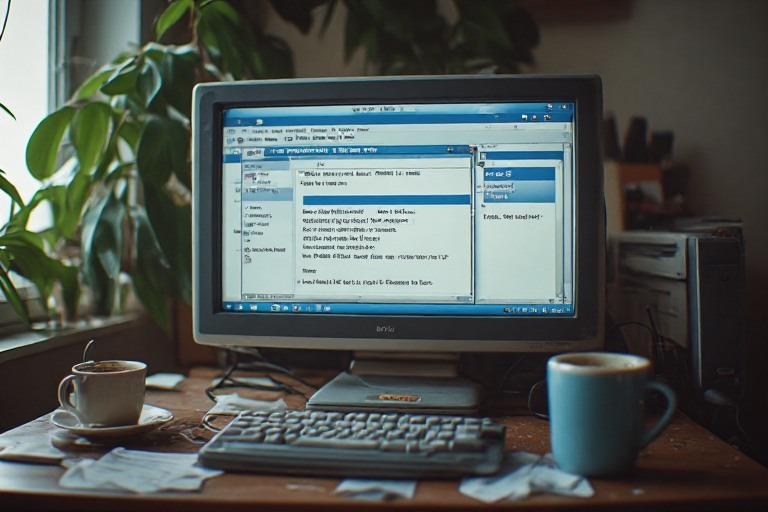
Look no further than modern corporate email clients: once lightning-fast, native desktop software has been replaced by web-tech wrappers. This architectural shift hasn’t just degraded system performance; it has fundamentally broken user privacy. When third-party account credentials, IMAP passwords, and sensitive email bodies are routed through proprietary cloud servers, regulatory frameworks like GDPR aren’t just strained—they are actively violated.
At the same time, hundreds of millions of enterprise and consumer PCs are facing artificial obsolescence due to rigid, ergonomically unfounded hardware restrictions. While alternative open-source operating systems like Linux are technically ready to inherit these machines, migrations consistently fail at the human layer: the lack of a familiar, enterprise-grade groupware and communication workflow.
The Keoma Suite—conceived in a comprehensive 2026 architectural blueprint—breaks radically from this cycle of endless visual churn. By fusing the rock-solid data structures of veteran open-source engines with a modern, memory-safe, and asynchronous Rust core, it establishes a new paradigm for digital sovereignty.
Here is a deep technical breakdown of how this native desktop renaissance is being built.
🏗️ The Hybrid Architecture: C/GTK Efficiency Meets Rust Security
To deliver a production-ready groupware client in months rather than decades, the Keoma architecture rejects the temptation to build everything from scratch. Instead, it splits the application into two strictly isolated technological domains linked by a statically compiled Foreign Function Interface (FFI).
┌─────────────────────────────────────────────────────────────────┐
│              FRONTEND / UI LAYER (Native C & GTK)               │
│  - Rigid 3-Pane Skeleton         - Zero-Latency Static Ribbons  │
│  - Sharp 0-px Edges              - Google Sans Typography       │
└────────────────────────────────┬────────────────────────────────┘
                                 │
                                 ▼ Typer-Safe FFI Bridge
┌─────────────────────────────────────────────────────────────────┐
│             BACKEND / PROTOCOL LAYER (Async Rust)               │
│  - Tokio Runtime / Reqwest Core  - Microsoft Graph API v1.0     │
│  - SQLite3 WAL Storage Engine    - BLAKE3 + ZStandard Deduplication
└─────────────────────────────────────────────────────────────────┘
🔹 The Frontend Transformation
The user interface strips out modern web overhead (no Chromium contexts, no Node.js bloat). Built on pure C and GTK, it forces an unyielding three-pane cascade calibrated to classic desktop ergonomics:
- Navigation Sidebar (Left): A flat layout dividing mailboxes, calendar, contacts, and tasks without confusing nested hierarchies.
- Message List (Center): A custom compact, two-line layout rendering essential headers instantly, featuring a vertical blue indicator for unread assets.
- Reading Pane (Right): A highly sandboxed and performance-isolated HTML engine displaying email bodies securely.
Menus are managed via static, native ribbon bars that transition immediately upon clicking without a single millisecond of interface latency. Visually, a global CSS provider enforces sharp, right-angled 0-pixel edges and high-contrast styling (Keoma Blue #106ebd, Keoma Gray #f3f2f2, and Charcoal #323130) optimized for maximal visual clarity.
🔹 The Asynchronous Rust Backend
While the frontend focuses on rendering fluidly at a locked 60 frames per second, the backend handles the heavy lifting. Written in Rust, it replaces old XML subsystems with a modern engine built on the tokio runtime and reqwest. It communicates directly with modern REST endpoints using Microsoft Graph API Delta-Queries—downloading exclusively modified JSON records to drastically minimize network traffic. For external accounts, a fully automated IMAP/SMTP layer handles autodiscovery and background IMAP IDLE real-time push notifications.
⚡ The Storage Engine: Block-Free SQLite WAL & Instant Search
All application metadata—emails, calendar schedules, tasks, and contacts—is cached within a highly normalized local SQLite3 database. To prevent the user interface from stuttering when the backend processes massive spikes of data (such as sync-streaming hundreds of enterprise emails at once), the database runs permanently under specialized performance tuning:
PRAGMA journal_mode = WAL;Write-Ahead Logging writes data changes into a separate file rather than locking the main database, enabling parallel read and write streams.PRAGMA synchronous = NORMAL;This configuration ensures that background tasks never force the application window to wait for physical storage synchronization.- Memory-Mapped I/O (
mmap_size): Maps database sectors directly into the process’s virtual memory space, bypassing expensive system calls during rapid scrolling.
🔍 Google-Like Instant Search via FTS5
The application integrates SQLite’s virtual table module, FTS5, coupled directly to automatic internal triggers. The second data hit the regular database tables, SQLite updates the shadow indices in the same atomic transaction. When a user types a query, the system runs an optimized UNION ALL search across emails, contacts, and attachments simultaneously. Because it accesses binary pre-compiled index tokens rather than scanning disk files sequentially, search results display in under 0.8 milliseconds, even across 20-gigabyte profiles.
🛡️ Hardened Security: Zero-Trust from Silicon to Network
Because this ecosystem is engineered for strict enterprise compliance, a three-stage cryptographic security layer is compiled directly into the system’s runtime core:
- 🔒 TPM 2.0 Token Binding: OAuth2 refresh tokens are never left unprotected in user home directories. The Rust backend encrypts sensitive metadata using AES-256-GCM, locking the decryption key directly to the computer’s physical motherboard via the Linux kernel’s Trusted Platform Module (TPM 2.0) API. Even if an attacker clones the entire storage drive, the tokens are cryptographically useless outside the native host computer.
- 🛡️ PKCE & Loopback Härtung: To defeat local interception malware, authorization flows strictly enforce Proof Key for Code Exchange (PKCE, RFC 7636) with SHA-256 code challenges. The temporary authorization loopback server is restricted solely to the IPv6 loopback address
[::1]. - 🌐 Strict Certificate Pinning via Rustls: By bypassing the host operating system’s standard OpenSSL stack in favor of Rustls, the network engine enforces TLS 1.3 natively. Cryptographic SHA-256 fingerprints (Subject Public Key Info pins) for authorized endpoints are hardcoded directly into the application binary. If a firewall in a compromised network attempts a Man-in-the-Middle certificate injection, the handshake aborts instantly.
- 🚫 Total Telemetry Exfiltration Block: During compilation, drakonische compiler flags and preprocessor directives (
-DENABLE_TELEMETRY=0) completely remove telemetry, tracking, and crash-reporting code paths inherited from legacy source repositories.
📱 The Keoma Phone Companion: Cloudless Synergies
One of the suite’s standout additions is the Keoma Phone Companion, a background utility written in Rust that bridges smartphones directly to the desktop workspace via localized peer-to-peer Wi-Fi or USB networks—completely independent of external cloud systems.
📞 Low-Latenz PipeWire Call Routing
When clicking a contact phone number, the frontend passes an IPC message through a secure UNIX domain socket to the backend daemon. The smartphone dials out over cellular networks while the daemon establishes real-time audio streams via the native PipeWire C API. PC microphone signals are captured as uncompressed PCM format (16-bit, 48kHz, stereo) and streamed to the phone, while incoming voice data routes directly to the desktop audio output. System latency stays below 12 milliseconds, automatically triggering an 80% volume ducking command across all other active desktop software for crystal-clear clarity.
🔄 The Suspended-State Transfer Protocol
Mobile devices constantly move out of network coverage. If a smartphone loses connection while streaming an image attachment, a state machine catches the failure. The file transfer pauses, caches partially received data bytes to disk, and saves a metadata snapshot file. The desktop interface switches its companion status icon to warning yellow. As soon as the device walks back into mDNS discovery range, a RESUME_REQUEST sends the exact byte offset over a fresh socket, prompting the smartphone to skip directly to that binary position and continue streaming smoothly without interface lockups or total data loss.
🔑 Biometric S/MIME Smartcard-Tokenization
To maximize data authenticity, the user’s private S/MIME signing key is permanently locked inside the secure hardware enclave of the phone (iOS Secure Enclave or Android StrongBox)—it can never be read by the computer. When sending an encrypted or signed corporate email, the desktop application calculates a SHA-256 hash of the complete message context and sends this small hash to the phone. The phone prompts for user authorization via biometric scanning (FaceID / Fingerprint). Only after validation does the phone’s hardware chip sign the email hash and pass the digital signature back to the PC.
┌─────────────────┐       SHA-256 Hash        ┌──────────────────┐
│   Desktop PC    ├──────────────────────────►│    Smartphone    │
│  Keoma Client   │◄──────────────────────────┤  Biometric Auth  │
└─────────────────┘     Digital Signature     └──────────────────┘
Even if malware takes over the desktop OS, it can never send forged emails in the user’s name without physical access to the phone and their unique fingerprint.
📂 The File Manager: Windows like Ergonomics with POSIX Core Speed
To flatten the learning curve for professional Windows users migrating to open-source software, the Keoma File Manager replicates classic, sharp edged file navigation via gtk4-rs, backed by intense system-level optimization.
🔹 Virtual Drive Abstractions
The system features a virtual path-mapping engine. If a user keys in a legacy string like C:\Users\Keoma\Documents in the address bar, the UI mirrors that layout exactly. Beneath the interface, the Rust engine maps POSIX system calls seamlessly to standard storage targets like /home/keoma/Documents.
🔹 High-Throughput io_uring Pipelines
To avoid system lockups when processing vast directories containing thousands of components, directory contents stream over asynchronous channels via the Linux kernel’s high-speed io_uring architecture. The GTK4 frontend updates columns and listings step-by-step through a GLib context callback, letting users scroll and select items immediately while deep file details continue populating in the background.
🔹 System Validation Matrix
| Component | Target Edge Case | Technical Core Solution |
|---|---|---|
| Phone Companion | Mobile background thread throttling | On-Demand BLE beaconing to wake sockets only when requested. |
| Phone Companion | Mobile OS API lockouts | Emulates Bluetooth Hands-Free / ANCS profiles natively to match hardware standards. |
| File Manager | Legacy Windows structures (.lnk files) | Binary chunk parsers process shell shortcuts and translate paths via the mapper. |
| File Manager | Case-Sensitivity differences | SQLite index validation layer runs pre-checks, triggering replacement alerts rather than splitting names. |
| File Manager | Rapid compiling I/O index stress | Smart-blacklisting unhooks active build paths (target/, node_modules/) from indexing. |
🏁 Conclusion: True Digital Sovereignty
The Keoma Suite proves that desktop applications do not need to give up processing speed or user privacy to be intuitive and feature-rich. By discarding resource-heavy web wrappers and building directly on native compiled code, it bridges the gap between classic user experience and modern hardware security. It offers a practical, clear pathway for corporate environments to achieve full digital sovereignty without compromising productivity.
cheers
Leave a Reply