We have all scrolled past the viral videos. A creator scoops up a chaotic handful of ocean waste, degraded fishing nets, beach debris, and old toys. They drop the colorful mixture into a roaring DIY shredder, feed the flakes into a small extruder machine, and moments later, out comes a perfect, slate-gray construction brick or a sleek designer stool.
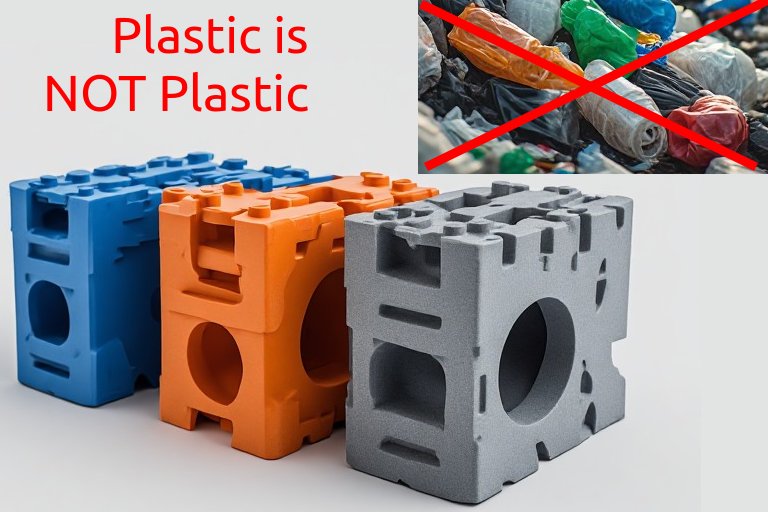
The caption usually reads something like: “Turning Trash into Treasure!” ✨
It looks like magic. It feels like the ultimate, democratic solution to our global waste crisis. It gives us hope that with a few thousand dollars worth of open-source machinery, anyone can set up a mini-factory and save the planet.
But if we strip away the media hype and look at this process through the lens of materials science and organic chemistry, the reality is far less glamorous. You cannot just melt down a random pile of plastic trash.
Here is the deep dive into why mechanical DIY recycling hits hard chemical boundaries, which plastics actually work, and what the viral videos conveniently leave out.
🚫 1. The Chemical Reality Check: Why You Can’t Just Mix Plastics
To the untrained eye, “plastic is plastic.” To a chemist, different plastics are as distinct from one another as wood is from iron.
Plastics are made of polymers—long, repeating chains of molecules. On a microscopic level, most of these polymer chains are completely incompatible. They behave exactly like oil and water.
🧪 The Problem of Molecular Incompatibility
If you chop up a High-Density Polyethylene (HDPE) milk jug and a Polypropylene (PP) yogurt container, mix the flakes, and melt them together, they will not form a new, super-strong hybrid material. Instead, they form a phase-separated mixture. As the plastic cools, the different polymers separate into distinct boundaries.
The result? A highly brittle object riddled with internal structural flaws. The moment you put weight on that recycled plastic brick, it will snap like dry twigs.
🛑 The “Taboo” Plastics of DIY Recycling
Many of the materials commonly found in unsegregated household or marine waste are actually dangerous or impossible to process in simple backyard setups:
- PVC (Polyvinyl Chloride / Resin Code 3): Found in old toys, hoses, credit cards, and imitation leather. PVC is an absolute hazard for DIY machinery. When heated past its melting point, PVC thermal degradation occurs, releasing highly toxic hydrogen chloride gas. If this gas comes into contact with moisture (like the humidity in your lungs), it turns into hydrochloric acid. It will literally corrode the steel components of your extruder and severely burn your respiratory tract.
- PET (Polyethylene Terephthalate / Resin Code 1): The material used for water and soda bottles. While highly recyclable in massive industrial plants, PET is a nightmare for small-scale extruders. It requires incredibly high, precisely controlled temperatures (above 250°C / 482°F). More importantly, PET is highly hygroscopic—it absorbs moisture from the air. If it isn’t dried in industrial desiccant dryers before melting, the water molecules break the polymer chains apart (a process called hydrolysis), turning the plastic into a watery, brittle, unworkable slag.
- PS (Polystyrene / Resin Code 6) & ABS: Found in plastic cutlery, styrofoam, and electronics housings. Heating these materials without professional, industrial-grade local exhaust ventilation releases volatile organic compounds (VOCs) and styrene vapors, which are heavily pungent and classified as hazardous to human health.
⚙️ 2. The Real Heroes: Which Plastics Actually Work?
If you look closely at successful small-scale recycling initiatives—such as the brilliant open-source movement pioneered by Precious Plastic—you will notice they don’t use mixed trash. They strictly limit their inputs to a very narrow, highly curated selection of two or three Thermoplastics (plastics that can be melted and solidified repeatedly without changing their chemical properties).
🔹 HDPE (High-Density Polyethylene / Resin Code 2)
- Where it’s found: Bottle caps, milk jugs, shampoo bottles, heavy-duty crates.
- Why it works: HDPE is the undisputed king of DIY recycling. It has a broad, forgiving temperature window (usually processed between 130°C and 180°C). It exhibits excellent thermal stability, meaning it doesn’t instantly burn if your heater fluctuates by a few degrees. Furthermore, it produces very low odor and minimal hazardous fumes when processed correctly.
🔹 PP (Polypropylene / Resin Code 5)
- Where it’s found: Yogurt tubs, microwave-safe containers, plastic furniture, car bumpers.
- Why it works: PP is highly rigid and has excellent fatigue resistance. When melted (around 160°C to 200°C), it flows smoothly, making it ideal for injection molding or filling complex molds. Like HDPE, it behaves predictably in small-scale machines.
🔍 3. The Hidden Labor Behind the “Treasure”
The beautiful, marbled gray blocks you see displayed on a pedestal in workshop videos are never the result of a direct “trash-to-object” pipeline. They represent hours of invisible, painstaking manual labor.
Before a piece of waste ever touches a shredder hopper, it must undergo three rigorous stages:
- Meticulous Sorting: Every piece of plastic must be checked by eye for its resin code. If a piece lacks a label, it must be subjected to burn tests (analyzing the smell of the smoke and color of the flame) or density float tests to verify the material.
- Decontamination: Ocean plastic is covered in salt, sand, algae, and barnacles. Household waste is covered in food residue, oil, and paper labels backed by strong adhesives. A single grain of sand acts like sandpaper, destroying the precision-machined screw inside an extruder. Leftover food or paper will instantly char and burn at plastic melting temperatures, creating black specks and carbon gas bubbles that ruin the structural integrity of the final object.
- The Polymer Degradation Clock: Plastics cannot be recycled infinitely. Every time a polymer is reheated and sheared through an extruder, its molecular chains break shorter. In industrial settings, virgin plastic pellets and chemical stabilizers are added to counteract this degradation. In DIY setups, the material naturally degrades after 2 to 3 cycles, becoming increasingly brittle.
💡 The Big Picture: Beyond the Hype
Small-scale, decentralized plastic recycling machines are incredible innovations. They serve as profound educational tools, vividly demonstrating the value of waste. They are perfect for hyper-local upcycling, turning highly curated, clean waste streams (like bottle caps collected by a school) into beautiful design objects.
However, promoting them as a scalable solution for unsegregated municipal or marine waste is a dangerous oversimplification.
True sustainability cannot be achieved at the end of the pipe with a backyard extruder. It requires Design for Recycling (DfR) at the very beginning—eliminating multi-layer packaging, banning toxic additives, and creating standardized, easily separable materials. Until then, the real work of recycling remains less about operating machines, and more about the rigorous, unglamorous science of sorting and cleaning.
cheers
Leave a Reply