This is a series of posts about the Dinitz-Garg-Goemans (DGG) conjecture, which describes a very special issue in many industrial areas.
This post describes the current situation and which activities are executed to get the issues somewhat under control, what is done by trial-and-error, til now…
To truly understand why the formal falsification of the Dinitz-Garg-Goemans (DGG) conjecture and the introduction of the Time-Buffer Theorem represent a monumental paradigm shift, one must first dissect the fundamental flaw underlying modern industrial engineering, computer networks, and macroeconomic logistics.
DOCUMENTATION LICENSE: CREATIVE COMMONS ATTRIBUTION 4.0 INTERNATIONAL (CC BY 4.0)

The explanatory text, structural descriptions, and mathematical analyses contained in this four-part series ("Part 1: The Status Quo", "Part 2: The
Mathematical Remedy", "Part 3: Low-Level Hardware Implementation", and "Part 4: Analytical Hardware Implementation") are licensed under the Creative Commons Attribution 4.0 International License.

You are free to:

Share: Copy and redistribute the material in any medium or format.

Adapt: Remix, transform, and build upon the material for any purpose, even commercially.

Under the following terms:

Attribution: You must give appropriate credit, provide a link to the license and indicate if changes were made. You may do so in any reasonable manner, but not in any way that suggests the licensor endorses you or your use.

To view a copy of this license, visit:
http://creativecommons.org

Copyright (c) 2026 by DFK. All rights reserved.
SOFTWARE LICENSE: THE MIT LICENSE (MIT)
for the source codes in the posts "Part 3" and "Part 4".
Copyright (c) 2026 by the DFK.
Permission is hereby granted, free of charge, to any person obtaining a copy of this software and associated documentation files (the "Software"), to deal
in the Software without restriction, including without limitation the rights to use, copy, modify, merge, publish, distribute, sublicense, and/or sell copies of the Software, and to permit persons to whom the Software is furnished to do so, subject to the following conditions:
The above copyright notice and this permission notice shall be included in all copies or substantial portions of the Software.
THE SOFTWARE IS PROVIDED "AS IS", WITHOUT WARRANTY OF ANY KIND, EXPRESS OR IMPLIED, INCLUDING BUT NOT LIMITED TO THE WARRANTIES OF MERCHANTABILITY, FITNESS FOR A PARTICULAR PURPOSE AND NONINFRINGEMENT. IN NO EVENT SHALL THE AUTHORS OR COPYRIGHT HOLDERS BE LIABLE FOR ANY CLAIM, DAMAGES OR OTHER LIABILITY, WHETHER IN AN ACTION OF CONTRACT, TORT OR OTHERWISE, ARISING FROM,
OUT OF OR IN CONNECTION WITH THE SOFTWARE OR THE USE OR OTHER DEALINGS IN THESOFTWARE.1. The Anatomy of a Heuristic: “Symptom-Fighting” vs. Mathematical Truth
In a perfect mathematical abstraction, networks are often modeled as continuous, fluid-like structures. In a fluid network, if a pipe or an optical fiber narrows, the flow splits into infinitely divisible fractions, perfectly bypassing bottlenecks without frictional loss. This is the realm of Fractional Flows governed by linear programming.
In the real world of industry, computing, and commerce, however, flows are inherently discrete and atomized. This is known as the Single-Source Unsplittable Flow Problem (SSUFP).
- A container ship cannot be split across two oceans.
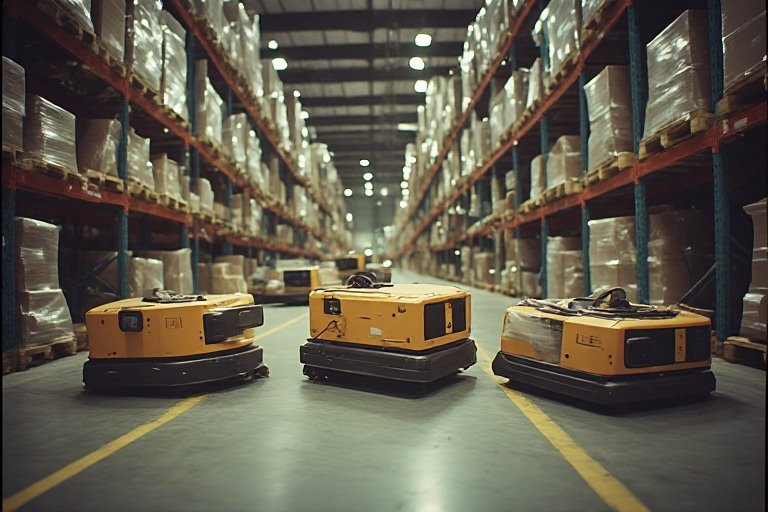
- An autonomous warehouse robot (AGV) cannot be halved to pass through an intersection simultaneously.
- An encrypted network packet cannot arrive as disconnected fragments without destroying the cryptographic handshake.
Because these units are unsplittable, they inevitably clash when competing for a shared, capacity-constrained edge (the bottleneck or main axis, ).
Historically, because computer scientists and industrial engineers lacked a universally proven, tight upper bound for cost esclation under these conditions, they turned to heuristics. A heuristic is fundamentally a sophisticated, rule-of-thumb guess. It is an algorithmic band-aid that says: “We cannot mathematically guarantee the absolute optimal path in real-time, so we will use an approximation that works ‘most of the time’ under standard conditions.”
2. Deep-Dive: How the Industrial, Digital, and Economic Sectors Currently “Solve” This Problem
Across different domains, engineers have built massive, highly complex, yet structurally fragile software layers to implement these heuristics.
+-----------------------------------------------------------------------------+
|                          CURRENT HEURISTIC APPROACH                         |
+-----------------------------------------------------------------------------+
|                                                                             |
|  [Incoming Unsplittable Demands]                                            |
|                |                                                            |
|                v                                                            |
|    ========================                                                 |
|    Is Bottleneck e_mid Busy?                                                |
|    ========================                                                 |
|          /          \                                                       |
|        YES           NO  ---> [Direct Route via e_mid (Cost L)]             |
|        /                                                                    |
|       v                                                                     |
|  +-----------------------------------------------------------------------+  |
|  | TRIAL-AND-ERROR HEURISTIC LAYER                                       |  |
|  | (Triggered by Spatial Blindness)                                      |  |
|  +-----------------------------------------------------------------------+  |
|  | - Spatial Rerouting / Deflection Routing                              |  |
|  | - Neural Network Trajectory Estimations                               |  |
|  | - Genetic Path-Finding Re-calculations                                |  |
|  +-----------------------------------------------------------------------+  |
|        |                                                                    |
|        v                                                                    |
|  [Force Flow onto Alternative Bypass e_out2]                                |
|  * Massive Spatial Detour                                                   |
|  * Unbounded Cost Explosion (Cost H -> Infinity)                            |
|                                                                             |
+-----------------------------------------------------------------------------+
Domain A: Computer Science & Network Topologies
In high-throughput routing, when a central router or switch experiences an influx of unsplittable data frames that exceeds the port capacity, it triggers deflection routing or dynamic re-routing protocols (like OSPF or BGP variations with dynamic metrics).
If the primary, ultra-low-latency link (L) is saturated, the heuristic layer forces the data packet onto an alternative topological arc (). In complex, multi-layered data centers or satellite constellations, this alternative route can span multiple hops, vastly increasing jitter and latency (H).
To manage this, network engineers deploy heavy software frameworks like Active Queue Management (AQM) or complex Machine Learning-driven traffic shapers that constantly monitor congestion metrics to predict packet collisions before they happen.
Domain B: Intralogistics & Robotic Warehouses
In automated fulfillment centers (e.g., Ocado, Amazon), hundreds of autonomous mobile robots (AMRs) traverse an orthogonal grid. When two AMRs calculate overlapping paths onto a single-lane track, the central Fleet Management System (FMS) steps in.
Because the FMS treats the problem primarily as a spatial optimization task, it deploys dynamic A* (A-star) variants, genetic algorithms, or localized potential-field heuristics.
When a collision is imminent, the heuristic reroutes the second robot around the blocked zone. This forces the robot to execute a wide spatial detour through secondary peripheral aisles.
Domain C: Global Supply Chains & Macroeconomics
In maritime shipping and global manufacturing, unexpected capacity caps (e.g., canal closures, port strikes, custom backlogs) interrupt the physical flow of goods.
Supply chain managers handle this by utilizing complex ERP (Enterprise Resource Planning) software running predictive analytics. If a primary transit corridor (L) is closed, the heuristic dictates an immediate alternative sourcing or shipping strategy.
For instance, air-freighting critical automotive sub-assemblies across continents because the ocean freight lanes are congested. This is a spatial deflection with astronomical operational premiums (H).
3. The Hidden Toll: The Financial and Computational Cost of Heuristics
Because these heuristic solutions are not anchored by a deterministic mathematical theorem, they exact an enormous toll on corporate and computational infrastructure.
3.1 Extreme Software Development & Verification Costs (The Simulation Trap)
Since a heuristic does not guarantee convergence across all edge-case scenarios, software systems must undergo grueling, months-long validation cycles. Companies deploy massive Monte Carlo simulation clusters to stress-test routing software under millions of synthetic permutations.
When a network breaks down in production due to an unpredicted, highly asymmetric “corner-case” topology (such as a structural dead-end), engineers must manually adjust the heuristic parameters, re-compile, and re-test. This endless cycle of patches costs enterprises millions in engineering hours.
3.2 Worst-Case Over-Dimensioning (Capital Waste)
Because system designers cannot mathematically prove the maximum upper bound of how far their operational costs or latencies will escalate when a bottleneck is hit, they are forced to over-engineer their hardware.
- Network architects buy enterprise switches with massively bloated SRAM buffer queues (30% to 50% larger than typically required).
- Logistics managers construct expansive buffer zones, wider aisles, and auxiliary staging tracks inside warehouses, wasting valuable square footage that could otherwise hold inventory.
- Supply chain executives lock up billions of dollars in liquid capital by maintaining bloated safety stocks at multiple geographic nodes to shield against unquantifiable routing penalties.
3.3 High-Performance Edge Computing Overhead
Dynamic pathfinders, neural-network-based traffic estimators, and genetic algorithms require substantial computational power. To run these complex heuristics in real-time at the edge of the network, factories must install high-power, active-cooled Industrial PCs (IPCs) running multi-core Intel Xeon or ARM Cortex-A class processors at every major intersection or switch node.
This drastically increases the initial capital expenditure (CAPEX), raises the continuous power consumption (OPEX) of the facility, and introduces thousands of active thermal failure points across the industrial floor.
cheers




2 thoughts on “Part 1: The Mechanics, Chaos, and Economic Toll of Heuristic Engineering in the industry – The Status Quo”